 EN
EN

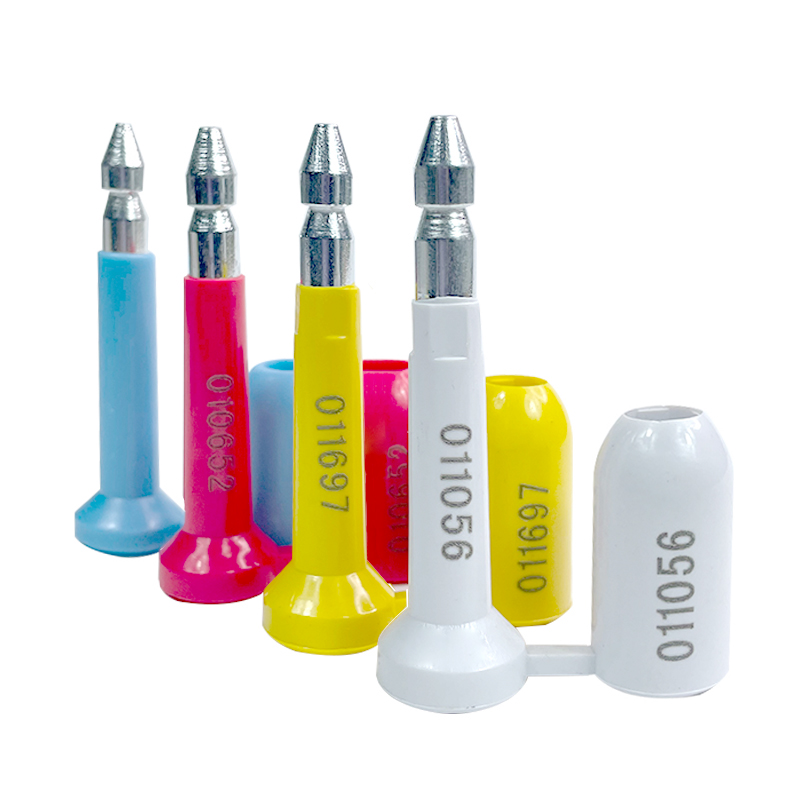
ISO/PAS 17712:2013 Certification: The Global Benchmark for High-Security Container Seals
Why ISO/PAS 17712:2013 is mandatory for international container seal compliance
Customs authorities and shipping lines worldwide accept only seals that meet the ISO/PAS 17712:2013 standard—a unified, globally recognized framework for testing and classifying mechanical freight container seals. Without it, ports and border agencies would rely on inconsistent inspection criteria, causing delays, operational friction, and supply chain uncertainty. Compliance ensures tamper-evident integrity and resistance to forced entry throughout transit. Carriers also require this certification to satisfy C-TPAT (Customs-Trade Partnership Against Terrorism) obligations. Using non-compliant seals triggers cargo holds, fines, and heightened customs scrutiny—directly impacting delivery timelines, cost control, and shipper reputation.
Decoding the three-tier seal classification: Indicative, Security, and High-Security (with test requirements)
ISO/PAS 17712:2013 defines three performance-based classifications grounded in physical resistance and tamper evidence:
- Indicative seals – Provide clear visual evidence of tampering (e.g., a fractured plastic strap) but offer negligible resistance to manual removal. Suitable only for low-risk, short-haul domestic shipments where security is not regulated.
- Security seals – Require basic hand tools for removal and show obvious signs of intrusion. They withstand moderate pull and shear forces, making them appropriate for non-C-TPAT domestic or regional transport.
- High-Security seals – Engineered to resist deliberate attacks using pliers, bolt cutters, or hammers. To qualify, they must pass independent laboratory testing for tensile strength (minimum 23 kN), bending, shear resistance, and environmental durability across -40°C to +70°C. Each seal carries the letter “H” and a unique, permanent serial number enabling full traceability. This tier is mandatory for all ocean containers under C-TPAT and accepted by major global carriers.
C-TPAT & CBP Enforcement: How U.S. Customs Validates Container Seal Compliance
Penalties for non-compliant container seals under 19 CFR §162.62
U.S. Customs and Border Protection (CBP) enforces strict consequences for non-compliant seals under 19 CFR §162.62. Violations can incur fines exceeding $7,500 per incident, according to publicly reported CBP enforcement data. Non-certified seals trigger mandatory cargo holds for physical inspection—often resulting in demurrage charges over $150 per day at major U.S. ports. Shipments may be rejected outright if seals lack valid ISO/PAS 17712:2013 High-Security certification, forcing costly rerouting or destruction of goods. Repeated failures subject partners to comprehensive supply chain audits and risk revocation of C-TPAT certification—a status critical to expedited customs processing and trusted trader benefits.
The 'Seal Integrity' requirement: Why C-TPAT alignment hinges on ISO/PAS 17712 High-Security certification
C-TPAT’s Seal Integrity requirement explicitly mandates ISO/PAS 17712:2013 High-Security certification for all container seals used by certified partners. This is not a recommendation—it’s a foundational security control. The standard validates anti-tamper performance through third-party testing, including resistance to bolt-cutter attacks exceeding 15,000 N and structural stability across extreme temperatures. It also verifies permanent marking, unique serialization, and design features essential for digital verification systems. Customs authorities automatically reject shipments bearing non-certified seals because they cannot reliably attest to cargo integrity during transit—undermining the core objective of C-TPAT: preventing illicit access before goods reach U.S. soil.
Bolt vs. Cable Container Seals: Selecting the Right Physical Design for Carrier and Regulatory Acceptance
Ocean carrier policies: Why major ocean carriers require bolt seals or certified high-strength cable seals
Leading ocean carriers—including Maersk, MSC, and Hapag-Lloyd—require either bolt seals or ISO-certified high-strength cable seals as part of their mandatory security protocols. This reflects both operational risk management and regulatory alignment: wire cutters—common, inexpensive tools—can easily defeat standard cable seals, while bolt seals demand industrial-grade bolt cutters or power saws for removal. That added barrier significantly reduces opportunities for opportunistic or coordinated tampering across multi-leg, multi-jurisdictional journeys. Critically, this policy directly supports C-TPAT compliance, as only bolt seals and cable seals meeting ISO/PAS 17712:2013 High-Security thresholds satisfy the program’s physical security requirements.
Performance thresholds: Bolt cutter resistance vs. ≥23 kN tensile strength for ISO-certified cable container seals
Container seal selection depends on validated, standardized performance—not subjective claims. Both bolt and high-strength cable seals achieve High-Security classification through distinct—but equally rigorous—engineering pathways:
| Security Feature | Bolt Seal Requirement | High-Strength Cable Seal Requirement |
|---|---|---|
| Primary Defense | Bolt cutter resistance | ≥23 kN tensile strength |
| Tamper Evidence | Destructive removal only | Visible distortion upon attack |
| ISO 17712 Compliance | Mandatory for High-Security | Mandatory for High-Security |
Bolt seals derive security from hardened steel construction and precision-machined locking mechanisms that resist handheld cutting tools. Certified cable seals achieve equivalent protection via minimum tensile strength—23 kN (≈5,170 lbf)—ensuring severance requires specialized equipment. Both designs must also pass shear, impact, and bending tests to earn High-Security status. This dual-path approach accommodates diverse container hardware while preserving consistent, auditable inspection standards for customs authorities worldwide.
Digital Authentication and Cross-Border Verification of Container Seals
Digital authentication is transforming how container seal integrity is verified—enhancing security, reducing friction, and strengthening regulatory compliance. While physical inspections remain essential, they are time-intensive and vulnerable to human error or oversight. Modern e-seals integrate RFID (Radio Frequency Identification) and GPS to enable real-time location tracking and automatic tamper detection, triggering immediate alerts upon unauthorized access attempts anywhere in the supply chain.
Blockchain-based platforms create immutable, timestamped digital ledgers that record every seal application, scanning event, and verified removal—providing end-to-end auditability. At automated checkpoints, optical and RFID scanners instantly verify seal IDs against electronic manifests, eliminating manual checks and accelerating clearance at ports and borders. When paired with ISO/PAS 17712:2013 High-Security physical design, these digital layers deliver defense-in-depth: robust physical deterrence backed by cryptographically verifiable digital proof. For shippers and carriers alike, this convergence delivers superior fraud prevention, stronger chain-of-custody assurance, and demonstrable alignment with evolving global security frameworks like C-TPAT and the World Customs Organization’s SAFE Framework.
FAQs
Why is ISO/PAS 17712:2013 certification important?
The certification ensures container seals meet internationally recognized standards for tamper evidence and physical strength, facilitating compliance with customs and shipping regulations worldwide.
What are the differences between Indicative, Security, and High-Security seals?
Indicative seals highlight tampering but are weak against manual removal. Security seals offer moderate resistance to forced entry with basic tools. High-Security seals resist industrial-grade tools and meet stringent testing criteria.
What happens if a shipment uses non-compliant seals?
Shipments using non-certified seals may face fines, delays, cargo holds, or even rejection by customs authorities, impacting delivery schedules and costs.
How do digital seals reinforce physical certification?
Digital seals integrate technologies like RFID and GPS for tamper detection and real-time tracking, adding an extra layer of security to the physical integrity provided by ISO-certified seals.
How do bolt and cable seals differ in security?
Bolt seals rely on hardened steel to resist bolt cutters, while certified cable seals provide equivalent tensile strength to withstand specialized cutting attempts. Both meet ISO High-Security standards.
Table of Contents
- ISO/PAS 17712:2013 Certification: The Global Benchmark for High-Security Container Seals
- C-TPAT & CBP Enforcement: How U.S. Customs Validates Container Seal Compliance
- Bolt vs. Cable Container Seals: Selecting the Right Physical Design for Carrier and Regulatory Acceptance
- Digital Authentication and Cross-Border Verification of Container Seals
- FAQs