 EN
EN

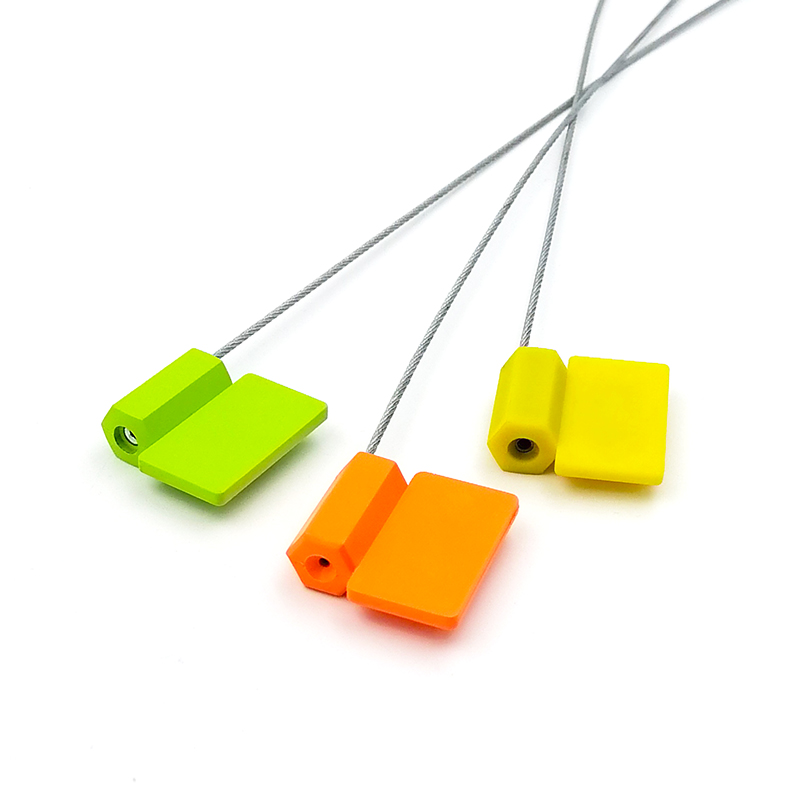
Container Seal as Critical Tamper Evidence for Global Cargo Security
Rising cargo theft and diversion across key trade corridors
Global cargo theft and diversion have risen sharply across major trade corridors, with annual losses exceeding $15 billion (International Chamber of Commerce 2023). Hotspots—including the trans-Pacific shipping lane, U.S.-Mexico border, and Mediterranean routes—account for 62% of all reported tampering incidents. Organized criminal groups increasingly target poorly secured containers because they can access goods, re-secure the unit, and evade detection until final delivery. Even minor security lapses can enable full cargo theft or illegal diversion, costing shippers and logistics providers thousands in lost goods and delayed shipments—and triggering cascading supply chain disruptions.
How ISO 17712-certified container seals provide legally recognized tamper evidence
ISO 17712 establishes globally accepted performance and testing requirements for high-security tamper-evident seals. Certified seals are engineered to visibly and irreversibly indicate tampering—through breakage, VOID markings, deformation, or other unambiguous physical evidence. Unlike generic alternatives, ISO 17712-compliant seals are recognized as admissible legal evidence in cross-border insurance claims and customs disputes. Their use reduces claim resolution time by an average of 45% and minimizes disputes among shippers, carriers, and insurers (Global Insurance Bureau 2024). Critically, they anchor the chain of custody with verifiable, standardized proof of integrity from origin to destination—supporting both operational accountability and long-term trade security objectives.
Regulatory Mandates: ISO 17712, C-TPAT, AEO, and Cross-Border Seal Requirements
U.S., EU, and China regulatory frameworks: Where container seal standards converge and diverge
International cargo security compliance depends on navigating overlapping—but not identical—regulatory expectations. The U.S. Customs Trade Partnership Against Terrorism (C-TPAT) mandates ISO 17712-certified high-security seals for inbound and outbound shipments. Similarly, the EU’s Authorized Economic Operator (AEO) program requires equivalent tamper-proof solutions aligned with ISO 17712. China enforces its own rigorous criteria through the Customs Supervision Zone Program, often requiring supplementary certifications like the CCC Mark. While ISO 17712 serves as the foundational global benchmark, implementation nuances persist: U.S. enforcement emphasizes documented chain-of-custody continuity, whereas EU protocols prioritize integration with automated customs clearance systems. These jurisdictional distinctions demand proactive, harmonized seal selection—not reactive compliance fixes.
Selecting high-security (H) container seals to meet dual-jurisdiction compliance
High-security (H-class) seals certified to ISO 17712 deliver the broadest regulatory coverage across major markets. They undergo independent third-party testing for tensile strength (minimum 2,250 lbf), shear resistance, and tamper visibility—ensuring consistent performance under real-world conditions. For shipments moving between the U.S. and EU, H-class seals satisfy both C-TPAT and AEO requirements without modification. When shipping to China, verify that the same seal carries required local certifications—such as CCC Mark—before deployment. Prioritize seals with unique serialization and integrated digital audit trails; this enables seamless verification across jurisdictions while eliminating redundant security layers and unnecessary cost duplication.
Container Seal Integrity as a Legal Prerequisite for Customs Clearance
Global customs enforcement: Rejection of unsealed or improperly sealed containers at borders
Intact, ISO-compliant container seals are a non-negotiable legal prerequisite for customs clearance worldwide. Unsealed, missing, or improperly applied seals trigger immediate rejection at border crossings—leading to mandatory secondary inspections averaging 48 hours in delay (World Customs Organization). Authorities treat compromised seals as indicators of potential smuggling, theft, or contamination, automatically elevating shipment risk profiles. This enforcement applies uniformly—not only at seaports and airports, but also at inland checkpoints and transit hubs—creating consistent pressure for seal integrity across end-to-end supply chains. Proper sealing is not a formality; it is the baseline condition for accessing expedited clearance lanes and avoiding operational gridlock.
Emergency access vs. seal integrity: Liability implications under the WCO SAFE Framework
The World Customs Organization (WCO) SAFE Framework permits authorized seal removal during legitimate emergencies—such as preserving perishable cargo or containing hazardous materials—but imposes strict evidentiary obligations. Under SAFE Article 7.3, carriers must submit a complete, time-stamped audit trail within 24 hours of any breach: including photographs of the compromised seal, signed witness documentation, and serial numbers of replacement seals. Failure to meet these standards shifts full liability to the logistics provider—potentially voiding cargo insurance coverage and exposing the operator to regulatory penalties. This underscores why standardized, auditable seal management—not just seal application—is essential for legal protection in international shipping.
Operational and Financial Consequences of Missing or Broken Container Seals
A missing or broken container seal initiates immediate operational and financial consequences. Non-compliant containers are routinely flagged for extended secondary inspection, adding 3–7 days of unplanned delay—disrupting production schedules, sales cycles, and customer commitments. These delays inflate storage, labor, and expediting costs, eroding already narrow freight margins. Regulatory fines for seal non-compliance range from hundreds to tens of thousands of dollars per incident, depending on jurisdiction and associated risk factors. Most critically, if theft, diversion, or damage occurs due to a compromised seal, insurers routinely deny claims—leaving businesses to absorb 100% of cargo loss. According to a 2023 global cargo security report, chronic seal non-compliance raises annual shipping costs by an average of 12% for mid-sized and large freight operators. Over time, repeated failures damage commercial reputation—triggering heightened scrutiny at every future border crossing and jeopardizing long-term contracts with customers and regulators.
FAQs
What is the significance of ISO 17712-certified seals? ISO 17712-certified seals provide globally recognized tamper evidence, reduce insurance claim disputes, and anchor the chain of custody for international cargo shipments.
How do container seals impact customs clearance? Intact and properly applied seals are mandatory for customs clearance. Missing or compromised seals can lead to border rejections, shipment delays, and additional inspections.
Why are high-security (H-class) seals recommended? H-class seals meet dual-jurisdiction requirements, ensuring regulatory compliance across major markets, including the U.S., EU, and China, while providing robust tamper resistance.
Can a compromised seal be replaced during shipping? Yes, but it must follow strict evidence protocols under the WCO SAFE Framework, including a complete audit trail and witness documentation.