 EN
EN

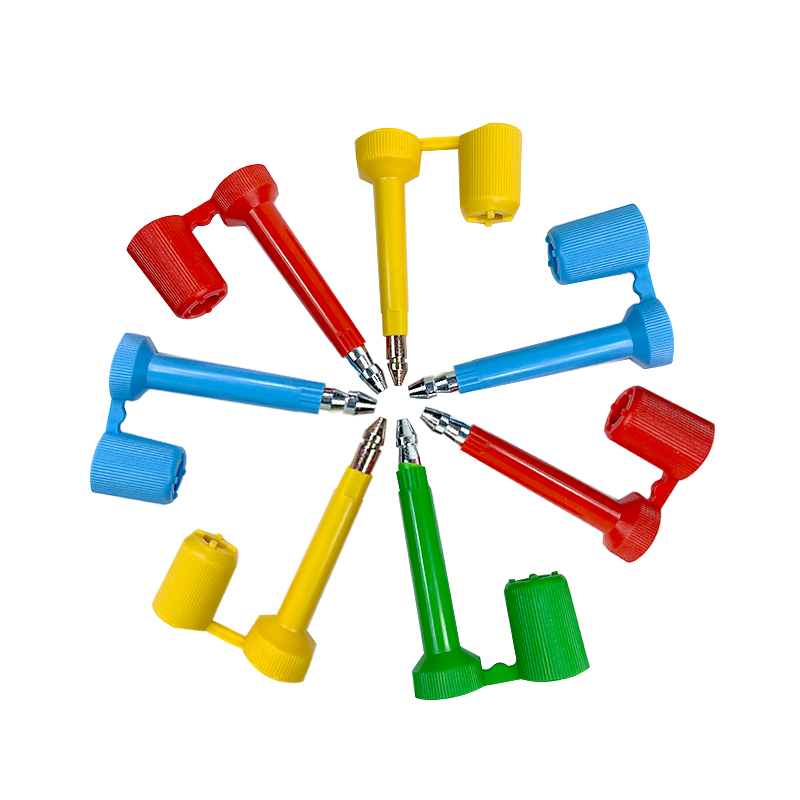
ISO PAS 17712 'H' Class—Bolt Seal Security Standard
Why 'H' Class Certification is Mandatory For High-Risk Cargo
Transit for certain items, like high-value pharmaceuticals or electronics, require the utmost care. H-class seals ‘H’ classification seal (the highest classification under ISO PAS 17712 Bolt Seal Security) uses the latest technology to prevent highly sophisticated seal-breaking methods, including bolt cutters, which require over 3,000 lbs. of force to break. There is ‘H’ class, and then there is everything else. Unlike ‘I’ and ‘S’ class seals, the ‘H’ class seal underwent stringent and uniform mechanical testing to validate its integrity. Cargo security audits conducted by FreightWatch (2023) found that shipments without a certified ‘H’ class seal had a 47% greater chance of being stopped. For cross-border trade, the U.S. Customs and Border Protection's C-TPAT program requires H-Class seals to protect containers. In the absence of ‘H’ class seals, Customs refuse the seal and levy a ‘Ponemon’ fee’ – a financial loss of approximately $740,000 (2023).
Key Requirements—Resistance to Tension, Shearing, Impact, and Bending
To achieve the 'H' class certification, bolt seals must undergo stringent resistance testing, which is only completed by ISO 17025 accredited laboratories. The tensile strength must be a minimum of 1,500 kg-force to prevent the seals from being stretched when the seals are to be handled and lifted. The seals must withstand a minimum of 1,200 kg-force of lateral pressure when seals are subjected to shearing. An impact test must simulate an accidental drop by exposing the seals to a 20 kJ drop. The seal's resistance to forced deflection must also be tested. These mechanical requirements guarantee that the seals will be adequately functional, even unbroken, after being exposed to the extreme heat and cold (from –40°C to +85°C) and to the sun’s ultraviolet radiation for a year.
Accredited Labs and the Third-Party Verification Process for Bolt Seal Testing
There is manufacturer bias, and third-party verification is the only way to guarantee the verification is objective. Accredited laboratories, including SGS and Intertek, measure failure points under tension, torsion, and compression, and follow the chain of custody. Tamper evident design features are assessed, such as micro laser etching, frangible housings that shatter when removed, and serial numbers that are assigned to traceable records of tamper evident documentations. The certification takes 8 to 12 weeks for the initial process, and if granted, the seal holder must maintain the certification with mandatory bi-yearly recertification. Self-certification of seals is not accepted; the customs authorities will only accept a report from a testing laboratory that is still within the three-year testing limit and meets the C-TPAT and ISPS Code compliance goal.
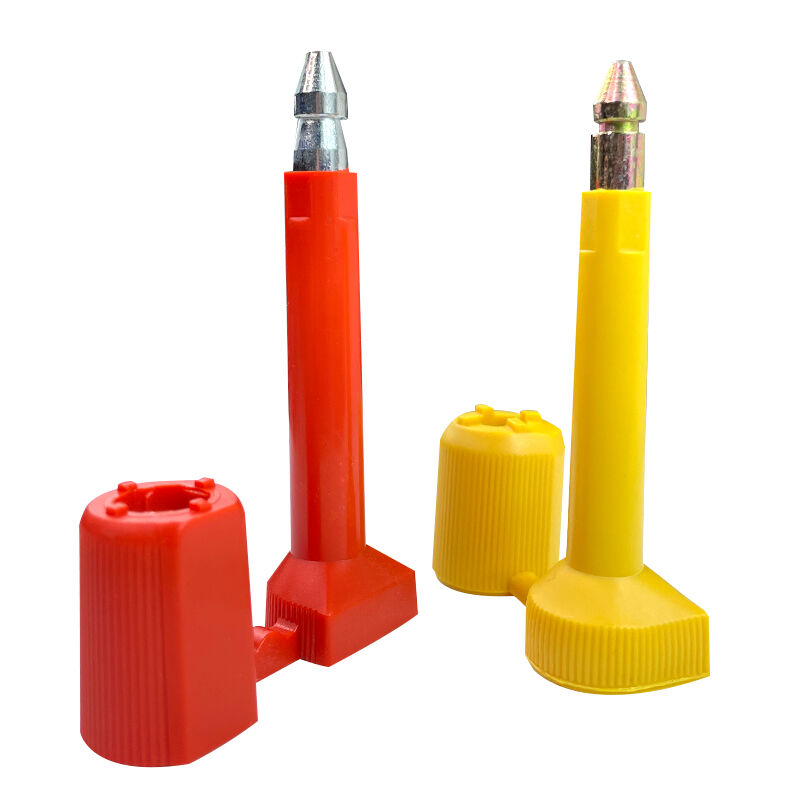
Design-integrity and Tamper-proof Design of Bolt Seals
A proper bolt seal must leave definitive and irreversible evidence of tampering in case of an intrusion. Visual and structural evidence must be the 'first-line' defenses against intrusion, and no evidence should be left that is in the least bit subtle.
Visual & Structural Evidence: Marking of an 'H', Metal Construction, and Resistance to Bolt Cutters
All bolt seals of ISO PAS 17712 'H' class must bear a permanent serial number, the manufacturer logo, and an 'H' marking that is applied via laser. Hardened metal construction of the seal is designed to withstand physical intrusion by bolt cutters, pry bars, and hydraulic cutters. Once locked, the seal has an anti-spin design, which prevents the seal from being rotated or unscrewed. The seal is designed in such a way that during routine inspections, cracks, deformation, discolouration or alignment may be evidence of tampering, and be in clear view.
Detecting Covert Tampering: Why Surface Damage Alone Isn’t Enough
Surface damage is insufficient for all forms of tampering detection, especially advanced tampering that leaves little or no external signs. Covert tampering may include the dissolution of locks using solvents or internal alterations of mechanisms without breaking the enclosure. These are the reasons why true 'H' class seals incorporate layered tamper evidence in the form of concealed break patterns, the exposure of internal removal deterrent locking pins, and the permanent distortion of structural support features. Tampering detection is a fundamental requirement. Therefore, inspectors must be educated about non-surface, secondary indicators in order to detect advanced tampering.
How Western C-TPAT Requirements Drive ISO 17712 ‘H’ Class Adoption in Supply Chains
U.S. Customs-Trade Partnership Against Terrorism (C-TPAT) requires the use of ISO PAS 17712 ‘H’ class bolt seals for all high-security cargo containers destined for the U.S. This requirement is a ‘must’ and not a ‘should’ under C-TPAT, and is actively enforced by U.S. Customs and Border Protection (CBP). Firms that commit to this standard gain benefits such as faster cargo clearance, fewer inspections, and access to trusted trader programs. ‘H’ class standard certification has become a global standard for not only U.S. bound freight, but also EU, ASEAN, and Middle Eastern countries that have trade regulations aligned with the ISPS Code and AEO frameworks, as well. Logistics providers have begun to integrate ‘H’ class seals across their entire supply chain.
Trusted Certification: Avoiding Self-Certified and Non-Accredited Bolt Seal Suppliers
The only way to guarantee ISO PAS 17712 ‘H’ class compliance is through third-party certification. Self-certified suppliers frequently do not have supporting documentation. Missing documentation would include tensile/shear tests, certification IDs, validations, and other examples. This creates critical weaknesses. 28% of self-declared “certified” bolt seals fail minimum mechanical requirements in independent tests, according to an industry analysis performed by SGS in 2022. Authenticated credentials should come from public databases showing the test dates as a recent as 3 years, and the scope of the test with regards to C-TPAT and ISPS. Any supplier who cannot provide full laboratory-validated certification documents, accreditation, and scope statements should be avoided. CBP and C-TPAT auditors state that third-party certificates should be provided, or purchases should not be made. This practice eliminates the threat of counterfeit and maintains both the physical and regulatory integrity of critical shipments.
FAQ
What is an ISO PAS 17712 'H' class bolt seal?
The bolt seal designed to the ISO PAS 17712 'H' class is the highest level of security. Bolt seals that meet this class of certification have been tested to resist tampering and to meet international standards for securing high value shipment.
Why is 'H' class certification important for cargo security?
The seal would resist duress from cutter attacks and the seal would resist duress from extreme environmental conditions, and other stresses. All of these attributes are critical for securing a shipment that contains high value/ high risk items, such as pharmaceuticals or electronics.
What are the core mechanical requirements for 'H' class certification?
Bolt seals must be tested for the mechanical properties of tensile strength, shear strength, loading, and bending, which must be completed in an ISO 17025-accredited laboratory.
What is the risk of purchasing bolt seals from self-certified suppliers?
Suppliers may pass their own audits but provide little to no documentation to support their claims or may fall below the standards during an independent retesting. This can lead to cargo vulnerability and violation of legal obligations.
Which authorities require 'H' class certification under ISO 17712?
The 'H' class certification for high-security shipments is required by U.S. Customs-Trade Partnership Against Terrorism (C-TPAT), ISPS Code, and CBP.