 EN
EN

Why Lead Remains the Gold Standard for Tamper-Evident Security
Material Science Behind Lead's Irreversible Deformation
Lead's deformation isn't elastic, as most metals are, so it gives a permanent indication on the security system that the seal has been tampered with. Lead's molecular structure differs from most other metals in that, when subjected to elastic deformation on the microscopic scale, the crystal structure is not restored to its original position. This results in the formation of a distortion that is both permanent and grossly visible. Lead's strength is relatively low, from 5 to 10 MPa, but it readily undergoes plastic deformation before fracture, leading to predictable shape changes from the application of force. Also, with a density of 11.3 g/cm3, it is a challenge to cut the lead without leaving large, obvious cut marks. Unlike sealable plastics that re-seal themselves, and shape memory metals that deform but retain their original configuration, lead breaks in a way that is easily interpretable by forensic experts, and is consistent with classical physical principles.
The Trust and Regulatory Endorsement of Legacy Systems
Lead seals are a tried and tested form of security and have reliably secured water meters, shipping containers, customs documents and government property tracking systems for over 100 years. These systems often have consequences for those tamper attempts and capture the perpetrators. However, the fact the seals have been used for so long doesn’t mean they are just used because they are simple. In fact, they are very effective, and when you put them to the test and they endure various conditions every day for years, they are superior. Most regulations still govern the use of lead seals for legacy systems. Think of the rules that govern U.S. Customs, ISO, and various energy boards in your country. According to the Ponemon Institute 2023, to replace all of those legacy systems over the compliance deadlines would cost businesses over 740 million dollars every year. Why have they done so well for so long? Basically, because of these three factors, lead completely outperforms all other materials in.
Property Performance and Security Impact
Corrosion Resistance: Withstands humidity, industrial chemicals, and even salt sprays. This prevents the masking of tampering from environmental factors
Temperature Tolerance: Effective from -40 to 150C. This even protects the seal from extreme global shipping conditions
Material Consistency: Uncontrolled batches have the same response to deformation in elasticity and plasticity. This eliminates false positives and maximizes the reliability of audits
This successful, extensive, and cross-sector experience makes lead the baseline to test every newer tamper-evident technology against.
Key Considerations When Choosing a Leg Seal
The Integrity of Cargo and Customs: ISO 17712 Certification
Lead seals must adhere to ISO 17712 standards. Why? Because overseas container shipping is involved. What are compliance standards? They require seals to undergo sever testing for forced entry and tool tampering, as well as extreme environmental conditions. Customs agents in 180+ countries require seals with ISO 17712 certifications to clear cargo. Failure to meet compliance standards is costly. There are legal and financial ramifications. Cargo is automatically detained for 3-7 days in compliance to modified requirements, and there are fines exceeding $10,000 for each violation. Certification requires actual independent lab testing as opposed to manufacturer claims. Certification testing must include a minimum of 10 kN in tensile strength, with resistance to shearing, and a strong rating for chemical resistance.
Traceability Features: Laser Engraving and Batch Marking
Lead seals with a good reputation do more than keep things secure. They can also provide valuable information that can be used later. Laser engraved serial numbers resist wear and tear, moisture, corrosion and extreme temperatures. This allows us to digitize the tracking of these seals from the time they are applied until they are cleared at customs. Batch level markings enable faster identification of the source of quality concerns and product recalls. Tracking these seals electronically has been shown to reduce the need for manual inspections by 66% when compared to traditional unmarked seals. In a warehouse, sealed cartons with tracking capabilities significantly reduce the opportunity for theft, which is reported to be an issue for 40% of freight losses. Enhanced seals transform from a simple physical control to a real-time electronic tracking and monitoring system when the right cloud storage is applied.
Aligning Lead Seal Design to Suit Application Demands
Button-Type vs Wire Lead Seal: Strength, Ease of Installation, & Suitability to the Elements
It is not all about looks when considering button type versus wire based lead seals. Button type lead seals have more advantages in situations where the priority is stronger security like on intermodal containers. No one wants to have their intermodal containers tampered with by bolt cutters or hydraulic spreaders. Installation is also quicker with lead seals and rope crimping tools due to the pre threaded wire or rope. Such tools provide a high degree of compression consistency. This is especially important with security devices to ensure that they operate reliably on every attempt.
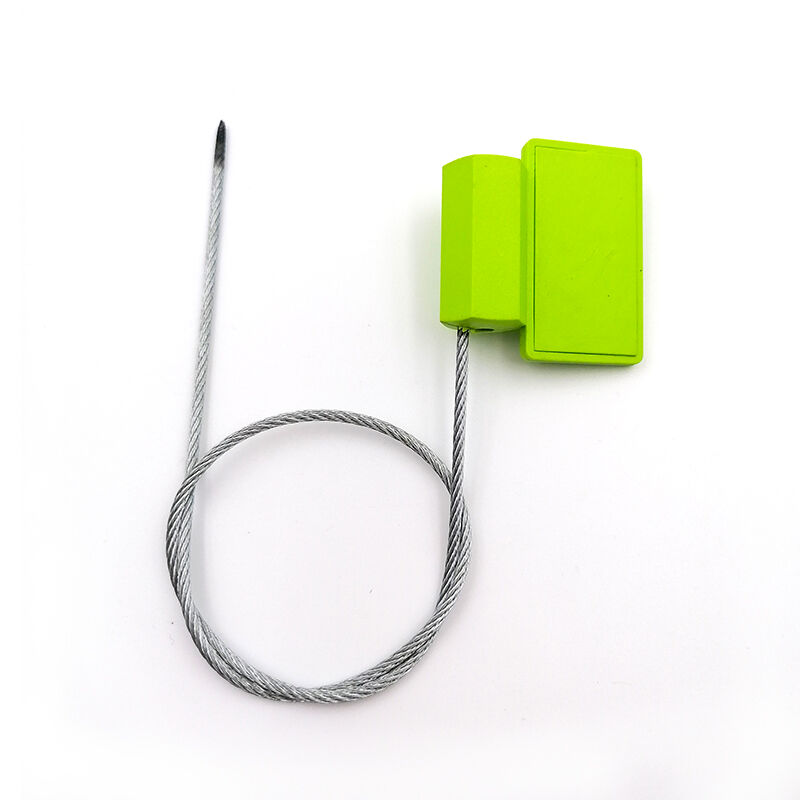
While wire based lead seals are less secure than button lead seals, they have a higher degree of flexibility in application. This is especially true in odd shaped areas like meter boxes, valve stems or pipe flanges as they may require field threading without specialized equipment. Although they are more prone to breakage from shear stress, newer designs are enhanced with a polymer covering to withstand corrosive environments longer.
Lead is a much better metal than plastic in terms of securely keeping seals closed because sealing lead is very difficult, and protecting it with lead offers an added bonus of a chemical coating that seals provide.
Environmental conditions (corrosion due to moisture and temperature, and vibration loosening of metal parts) and chemical conditions (interaction with liquids and gases), as well as physical conditions (trucks or other vehicles on which the buttons may have to endure heavy road-frequent travel) do impact the buttons themselves and therefore do also impact the buttons. The polymer-coated lead buttons have a much stronger hold on buttons and seals than do the non-polymer-coated ones. Additionally, polymer coating also helps resist corrosion through the buttons and seals themselves, as it can actually most effectively do. Should lead-coated buttons instead hold up better to the stresses associated with road vehicular travel and so endure longer.
Questions and Answers
What is the reason for the general preference for using lead as a sealing medium with the highest value of security?
Lead is appreciated for its very high density and uniform tight packing of atoms (high molecular mass) which, for most of its constituents, results in very high plasticity. This makes it trivial to create a seal around an object without an easy or temporary means of redoing that seal. It's able to do this because lead's very high density and elasticity mean that the seal can break, and essentially all of the lead can remain close to where it had been prior to the closing of the seal.
What are the requirements for lead seals to be accepted for the protection of cargo and customs?
To be accepted for the protection of cargo and customs, lead seals must demonstrate compliance to the ISO 17712 standard for impediments to environmental, chemical, and physical forces associated with non-compliance to entry, and for customs. These factors are very critical for delivery of cargo in closed containers on ships operating internationally.
In what way do the serial numbers on lead seals help with traceability?
With the help of laser engraving, lead seals can be tracked digitally from the time they are applied all the way through customs, improving traceability and eliminating the need for costly inspections.
What are the benefits of lead seals with buttons and lead seals with wires?
Button seals are better for intermodal containers because they have better tensile strength, while wire seals are more flexible for odd shapes and are corrosion resistant due to a coating of polymer.