 EN
EN

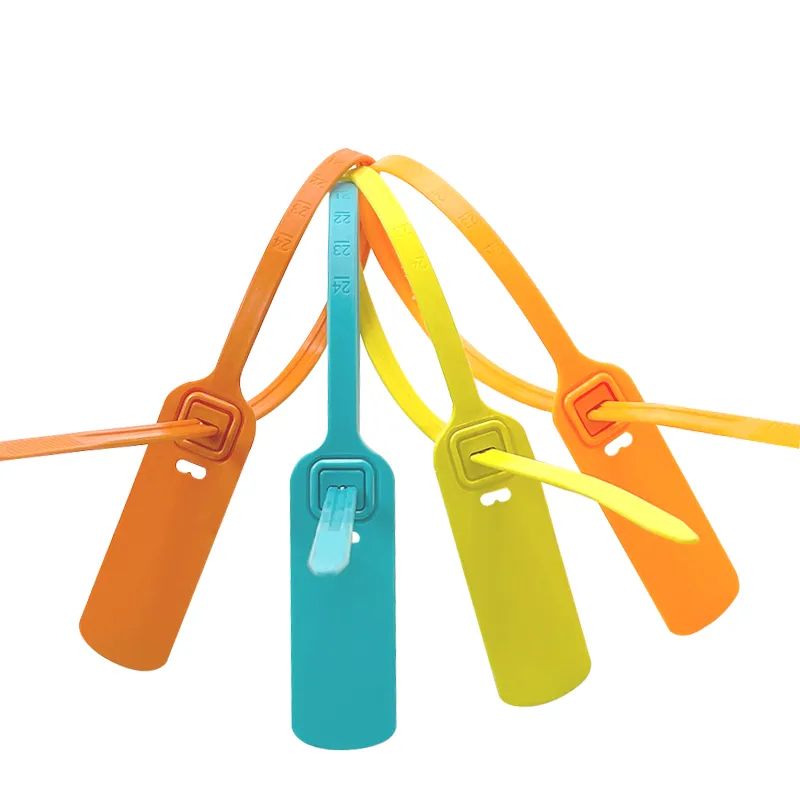
Setting Light-Duty Specifications for Plastic Security Seals
What Light Duty Means: Load, Environment, and Tamper Evidence
Light duty plastic security seals are ideal for low stress applications, typically under 50 lbs, and offer evidence of tampering through breakaway components or gaps. These seals operate in environmental extremes of -20 degrees Fahrenheit (-29 Celsius) to 150 degrees Fahrenheit (roughly 66 Celsius) without damage from sunlight, chemicals, and physical abrasion. Light duty seals are less expensive than heavy duty seals, making them as you’ve guessed more cost effective and easy to use. They provide a level of security that deters quick theft, but in the absence of a tool, can lead to theft. They are great for moderate risk theft and environmental reliability, as they hold up well under a consistent environment.
Standard uses for plastic security seals include door locks, valves, switches, and panels.
Locking doors: Used for interior cabinets, lockers, or access panels, door locks deter average tampering.
Valves: Used for water, compressed air, or low-pressure gas lines, valves maintain positional integrity.
Electrical switches: Used for non-critical control systems, electrical switches prevent unauthorized activation.
Equipment panels: Used on machinery housings or service points, equipment panels verify maintenance access.
These uses show the importance of environment and auditability over the industrial-grade durability of the security seal. The seal can be easily installed without tools, and this allows for routine resealing.
Determining which of the Plastic Security Seals is best for you means examining the polymers you intend to use regarding their tensile strength, UV resistance, and thermal tolerance.
Nylon is known for its high tensile strength which is estimated to be between 12000 to 15000 psi, however it has extreme susceptibility to UV damage, so this would be unsuitable for many light duty sealing applications unless it is UV stabilized.
Polypropylene (PP) is cheaper, and has the best thermal (up to 180 degrees Fahrenheit (82 degrees Celsius)) and chemical resistance, however, it can become brittle below the freezing point.
High-Density Polyethylene (HDPE) has less tensile strength than nylon (between 4000 and 6000 psi) but offers superior UV resistance, moisture resistance (it is able to remain “flexible” to -40 degrees F), and is resistant to extreme temperatures between -40 degrees Fahrenheit (F) to 176 degrees F (80 degrees Celsius). This makes it ideal for applications for sealing in light extremes.

Field Performance Data: Failure Rates in Indoor vs. Sheltered Outdoor Settings
In 2023, an ISO 17712-aligned field study followed 5,000 light-duty deployments for 5,000 light-duty deployments in indoor versus sheltered outdoor environments. Results illustrate the first stages of environmental stressors, which expose weaknesses in materials:
Material Indoor Failure Rate Sheltered Outdoor Failure Rate Primary Failure Cause
Nylon 0.8% 9.2% UV degradation
Polypropylene 1.1% 3.5% Thermal cycling fatigue
HDPE 0.9% 1.8% Mechanical overload
Given its consistently low failure rates, particularly its 1.8% outdoor failure rate, HDPE is ideal for applications such as the security of electrical panels or the protection of valves from thermal cycling and partial exposure.
Best Use Cases for Light Duty Plastic Security Seals
Pull-Tight Plastic Security Seals
Pull-tight plastic security seals can be applied quickly and will show signs of tampering. The design consists of flexible components that allows a single worker to apply the seals to challenging locations, including valves, building entry/exit pipes, or on equipment panels, while avoiding the need for tools. Internals of the seal are designed to snap closed, and be permanently locked. Seals are then designed to be broken or show evidence of tampering. Most facilities report seal installation time decreases approximately forty percent compared to traditional bolt seals. Most locations report less than five percent of false alarms. Seals are designed to function from -20 to +60 degrees Celsius, covering almost all indoor operating conditions.
Seals with Fixed Lengths and Seals with Adjustable Lengths: Reusability and Tampering Security Contradictions
When deciding between fixed-length seals and adjustable-length seals, a crucial factor is where most of the operational focus is, tampering integrity or ease of resealing:
Feature Fixed-Length Seals Adjustable Seals
Tensile Strength 250–350 lbs (compliant with ISO 17712) 150–250 lbs
Reusability One-time only 5–10 times
Tamper Evidence Visual fracture indicators Friction slippage
Failure Rate 0.8 % (sheltered outdoor) 3.1 % (sheltered outdoor)
Regarding tampering, fixed-length seals perform 67% better, and therefore, are most suited to applications that need more permanent high-integrity seals, such as critical valve locks. Adjustable seals are better suited to more frequent points of inspection, for example, access to electrical cabinets, where the ease of resealing is more important than the evidence of sealing being less than robust.
Choosing Your Plastic Security Seals: The Framework
Choosing a light-duty plastic security seal involves consideration of three dependent variables:
Risk of Asset
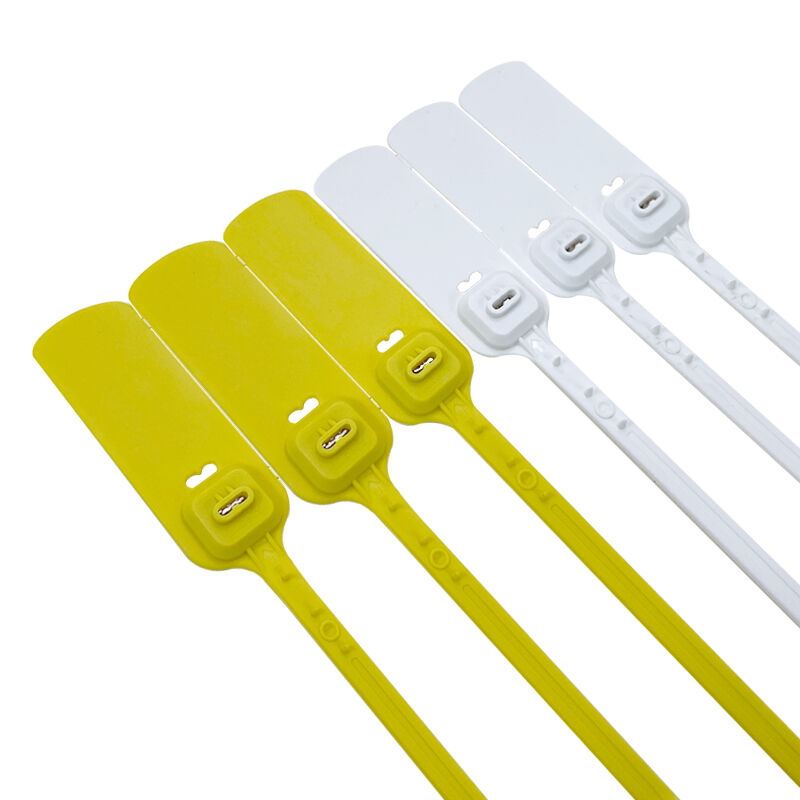
The impact that seal integrity has on asset security is critical, especially the evidence of tampering for low-value seals. In contrast, more high-value utility interfaces or access control valves would be more appropriate for higher forensic levels of evidence and greater tensile strength indicators.
Exposure to The Environment
An indoor only use limit on the seal would allow use of a wider range of polymers, However, where there is exposure to UV, or heat and cold (such as near windows, loading dock, or unconditioned mechanical room) UV stabilized nylon and HDPE are best. Reinforced polymers are seen through field data to be 18% better than standard polypropylene for sheltered outdoor use.
Evidence Rigor
Define required evidence rigor:
Basic: Clear mark cuts or separation
Enhanced: Permanent void showing fragmentation or void activation
Forensic: Tool marks visible on a microscopic level, or serial numbering of a type that can be tracked
High-security seals can be 40-70% more than standard light-duty options. In accordance with the budget and work-flow restraints, emphasis can be placed on designs that give the best value protection. Consider ISO 17712 certified designs that are engineered to your individual load requirements (typically, light-duty roles are in the 50-150 lb range) to avoid over-engineering.
FAQ
What are light-duty plastic security seals used for?
Light-duty plastic security seals are used for applications having low-tension requirements, e.g., for securing the interior of cabinets, valves, electrical switches, and panels on equipment. They are used in situations where auditability is more important than durability to an industrial level.
What materials are typically used for light-duty plastic security seals?
Light-duty plastic security seals are typically made of nylon, polypropylene, or HDPE, each offering different performance characteristics that include tensile strength, UV resistance, and temperature range.
How do pull-tight seals work?
Pull-tight seals are designed to be fast to apply and provide clear evidence of tampering. They are made of flexible layers that click shut once pulled tight, and a removal attempt will typically result in the seal breaking, or showing a VOID mark.
What is the difference between fixed-length and adjustable seals?
Fixed-length seals are intended for high-integrity and permanent use, and provide visual indicators of fracture. Adjustable seals are designed for high-traffic inspection points and allow multiple uses through a friction-based slippage.
How do I select a suitable plastic security seal?
Choose seals based on the vulnerability of the assets, the exposure of the environment, and the level of tamper-evidence required. Opt for seals with certifications and design specifications for your load range for optimum protection.