 EN
EN


Cost-effective Scalability for High-Volume Plastic Seal Deployment
Low raw material costs and low costs of injection molding enable mass production
Plastic seals take advantage of low-cost polymers and materials like polycarbonate, which costs 40% less than metal alloys, and easily achieved, high volume, high production targets of 50,000+ seals/day, at about $0.07 per unit. With tooling amortization, the cost shrinks by 60% at the 100,000 unit volume making the seals the only choice for utilities with high-volume deployments of electric meter seals, potentially 10,000,000 annually.
Designed to be low-labor, high-throughput use and for cost constraints, engineered to meet break strength limits
The system is molded to take advantage of engineered fracturing, with the break point set at 20-25 PSI. This design aids in tamper-proof seals while also allowing the break point to be sparse enough allowing for the seal to be broken and set in under 8 seconds. This design is adapted to high-volume throughput, such as in retail chains where each employee sealed cash deposit bags in excess of 500 bags per hour. The locking system of the seals keeps the bags sealed in addition to losing the potential to be resealed, cutting the inspection time by 75% compared to reusable seals, while also eliminating the risk of tampering.

Combine evidence of tampering prevention and compliance of regulations in all of your seals
Includes numbered seals, barcodes, and visual evidence of tampering
Modern plastic seals bring the characteristics of security materials, for the first time, beyond the barrier of the seal itself. Enhanced laser support barcodes, who achieve permanence in different forms of weather as opposed to fading, provide direct evidence of changes in a chain of custody through supply lines. Beaks in the closure of these seals provide initial evidence of tampering, which is important in the areas of utility metering and which, in many instances, can reduce the time from discovering a breach to seal to a median of approximately 26 hours. The reduced time frame is in excess of 90,000 hours.
Standards and regulations for utility seals (ANSI C12.18), rail freight (ISO 17712), and payment seals (PCI-DSS)
Plastic seals are designed to meet the regulations for specific industries and categories. Utility variants of these seals meet the regulations for unique seals to be submitted for and tethered to a permanent record. The compliance to the ISO 17712 regulations for global freight is based on the control of strength, bypass, and direct evidence of tampering. For the retail payment industry, achieving closure involves the support of unique and permanent seals through the use of a numerically and inherently tampering global payment industry. When used together, these regulations reduce the cost of managing sign and pass audits.
Plastic seals are useful for harsh and sensitive environments for many reasons.
While plastic seals may be more expensive than metal and wax seals, the following three characteristics are incredibly valuable for utility and retail infrastructure: UV resistance prevents plastic seals from becoming brittle or discolored from the sun, non-conductivity reduces the risk of short-circuiting and galvanic corrosion, and chemical inertness ensures stability in the presence of acids, solvents, protective salts, and moisture. Seals have been tested in temperature extremes of -40°F to 200°F and in ozone-filled coastal environments, and material failures have been reduced by 40% in the field over the traditional seals. They have delivered greater long-term reliability with an incredibly low maintenance requirement.
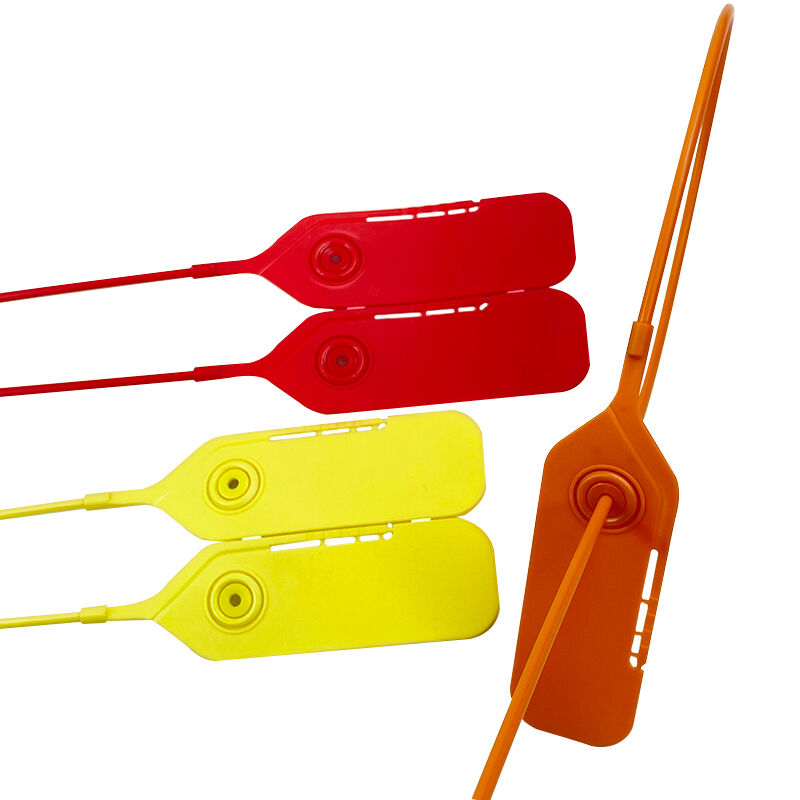
Plastic seals can be customized to suit your needs in terms of color, branding, placement of RFID, and to accommodate different sizes.
Plastic seals can be used in large areas with varying security requirements without losing defense. Inspections can be done in less time if seals are color-coded. Imprinted seals can increase the security of large retail operations and can decrease the risk of counterfeiting. In addition, to improve efficiency, RFID can be placed in seals to allow for real-time tracking. Seals can also be made in different sizes to improve efficiency in logistics and operations.
Plastic Seals' Proven Dual Vertical Efficacy: Retail Cash Handling and Utility Asset Protection
Plastic seals provide documented security solutions to both retail cash handling— where they permanently secure bags against breakage in transport—and utility asset protection, where they secure against unauthorized access to utility assets— both within the highest volume and highest stakes deployment environments. In retail, they have documented theft reductions of 89% in third-party audits. In the utility vertical, the Ponemon Institute (2023) reports the average cost of a single unauthorized access/metre tampering incident to be in excess of $740,000. Importantly, the same engineering that goes into certifying a plastic seal in the lab, also ensures the environmental and break- strength requirements are also met outside of the lab—meaning whether they are used to seal bags in a cash handling kiosk in a retail store, and/or securing the cash handling of a payment terminal, they will provide the technical performance needed to pass audit and seal integrity and contravention scalability requirements. Thus, plastic seals are the best solution where the integrity of audits, scalability, and the tamperable evidence of seals are non-negotiable.
FAQs
Q: How are plastic seals more cost effective to produce than metal seals?
A: Plastic seals are primarily produced from low-cost polymers (most frequently polycarbonate) and are mostly produced by injection molding, which can cut production costs by as much as 60%. They are therefore well suited to high volume retail and utility meter deployments.
Q: How do plastic seals provide evidence of tampering?
A: Plastic seals provide tamper evidence by a variety of means such as controlled breakage, active fracture mechanisms, irreversible color changes, irreversible chemical reactions, changes in geometry, numbered sequencing, bar-coding, and/or the inclusion of lasers.
Q: Will plastic seals withstand a high degree of environmental variance?
A: Yes. Plastic seals are chemically inert to UV, non-conductive, and non-reactive to a range of environmental challenges such as high-level variances in temperature, high variance in humidity and/or reactive environments.
Q: Can plastic seals be customized for various industries and applications?
A: Yes. Plastic seals can be custom color-coded, branded, have embedded RFID, and have form factor modifications to accommodate different industry applications such as cash handling, freight security, and utility applications.
Q: Do plastic seals meet standards for security and regulations?
A: Yes, plastic seals meet standards for strength, serialization, and resistance to tampering across various industries and applications, including ANSI C12.18 for utilities, ISO 17712 for freight security, and PCI-DSS for retail payment security.